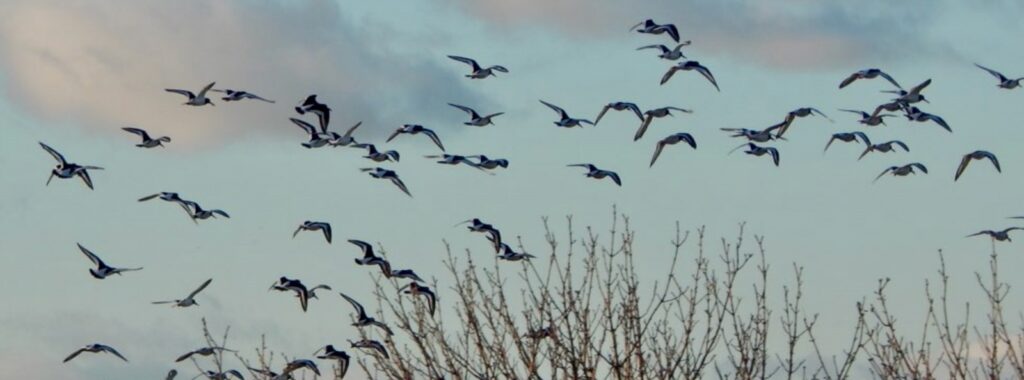
Bird Index
The birds listed here are species regularly seen around the gardens, allotments and wild spaces of north-west Edinburgh, particularly around the Lauriston Farm Agroecology Project, nearby fields and hedgerows, and the coastal areas of the Firth of Forth.
The habitats in this part of the city are surprisingly varied. Productive gardens and hedgerows attract many familiar garden birds, while open farmland, woodland edges and wetlands support a wider range of species throughout the year. The nearby shoreline and estuary also bring occasional coastal birds and winter visitors.
This guide is a simple record of some of the birds that can be seen locally. It is not a complete list, but rather a growing collection of species observed while working on the allotments, walking around Lauriston Farm, or exploring the nearby coast and waterways
Use the habitat index below to jump quickly to different groups of birds commonly seen in the area..
| Gardens and Hedgerows | Corvids and Larger Birds | Farmland and Woods | Seasonal Visitors |
| Rivers, Ponds and Wetland | Coastal and Estuarine | Birds of Prey |
Gardens and Hedgerows
- Blackbird (Turdus merula)
- Blue Tit (Cyanistes caeruleus)
- Coal Tit (Periparus ater)
- Great Tit (Parus major)
- House Sparrow (Passer domesticus)
- Robin (Erithacus rubecula)
- Wren (Troglodytes troglodytes)
- Dunnock (Prunella modularis)
- Starling (Sturnus vulgaris)
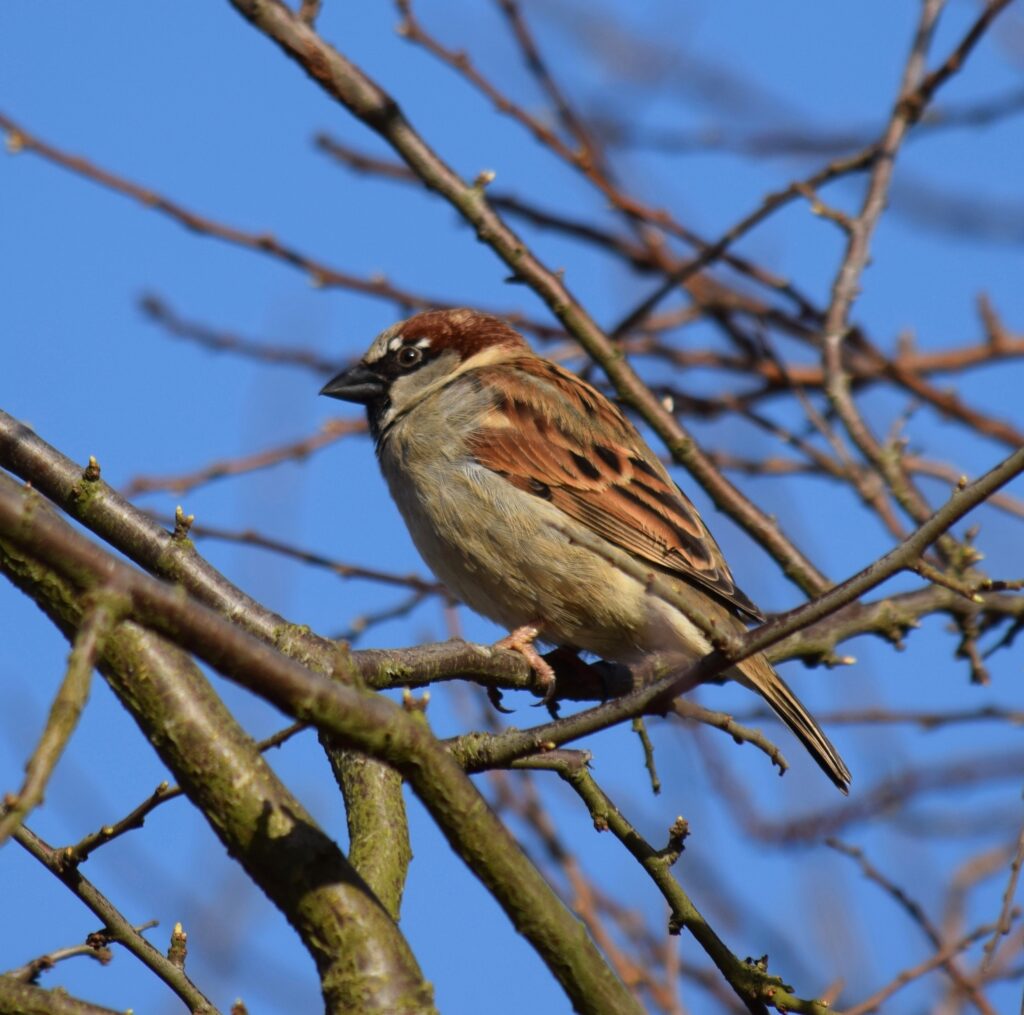
House Sparrow (Passer domesticus)
A familiar companion of gardens and allotments, house sparrows are usually seen in lively groups around sheds, fences and hedgerows. Although once extremely common, their numbers have declined in many towns and cities, making green spaces like allotments increasingly important for them.
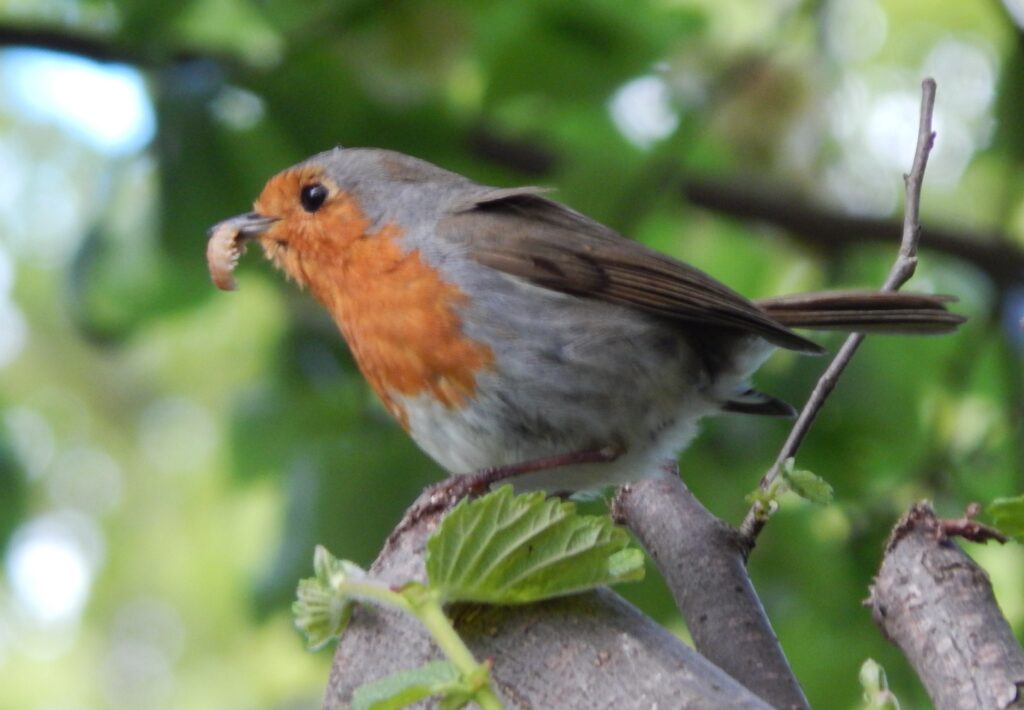
Robin (Erithacus rubecula)
A familiar and inquisitive bird often seen around gardeners at work. Robins quickly take advantage of disturbed soil to hunt for worms and insects.
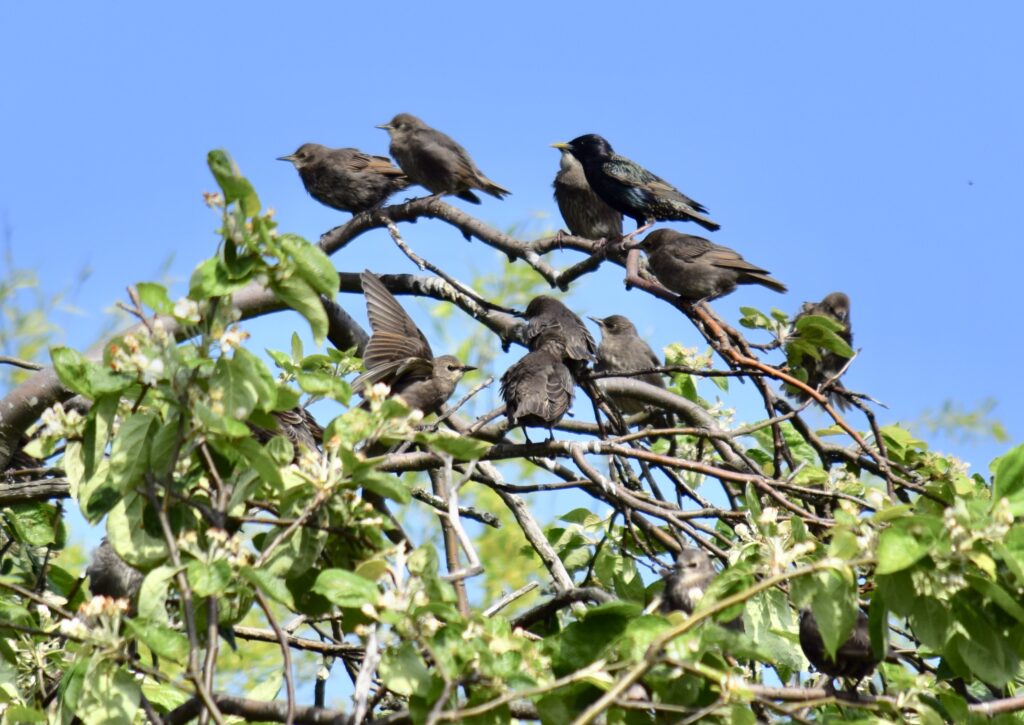
Starling (Sturnus vulgaris)
Starlings are lively, sociable birds often seen in groups probing lawns and soil for insects and worms. In autumn and winter they may gather in large flocks, forming dramatic aerial displays known as murmuration before settling to roost.
Corvids and Larger Birds
- Woodpigeon (Columba palumbus)
- Carrion Crow (Corvus corone)
- Magpie (Pica pica)
- Jackdaw (Coloeus monedula)
- Rook (Corvus frugilegus)
- Jay (Garrulus glandarius)
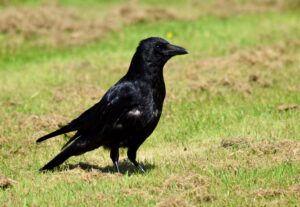
Carrion Crow (Corvus corone)
Carrion crows are intelligent and adaptable birds often seen walking across fields or perched on fence posts. They feed on a wide variety of foods including insects, small animals and carrion.
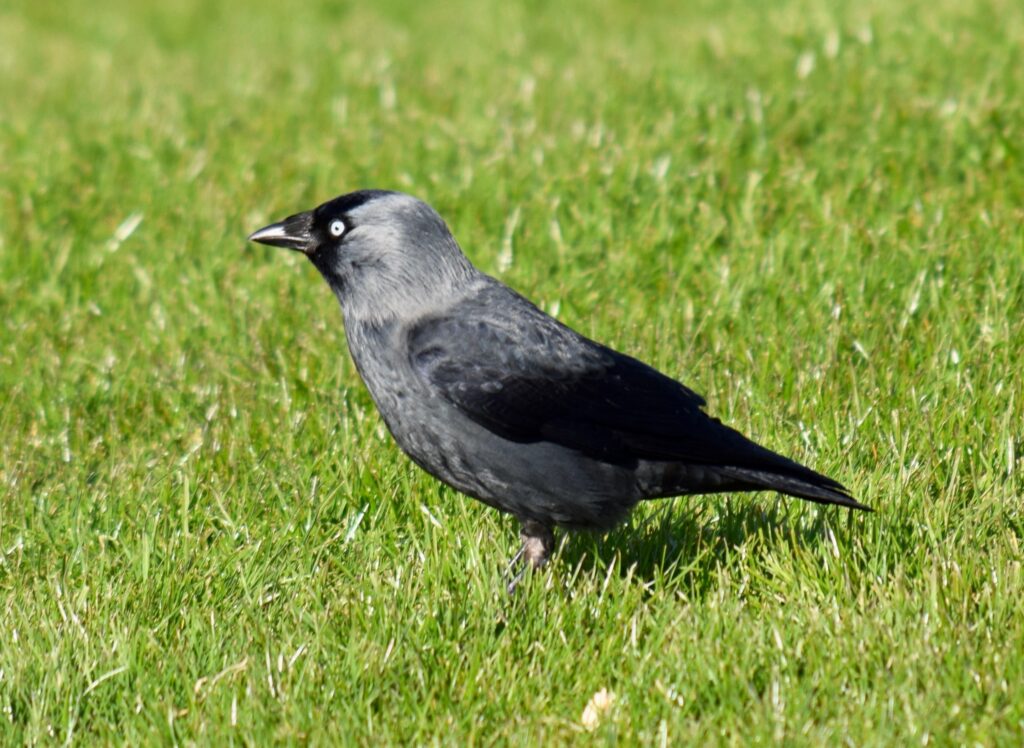
Jackdaw (Coloeus monedula)
Jackdaws are small members of the crow family, easily recognised by their pale grey nape and bright pale eyes. They are sociable birds often seen in noisy groups around farmland and rooftops.
Farmland and Woods
- Goldfinch (Carduelis carduelis)
- Chaffinch (Fringilla coelebs)
- Greenfinch (Chloris chloris)
- Bullfinch (Pyrrhula pyrrhula)
- Wheatear (Oenanthe oenanthe)
- Skylark (Alauda arvensis)
- Meadow Pipit (Anthus pratensis)
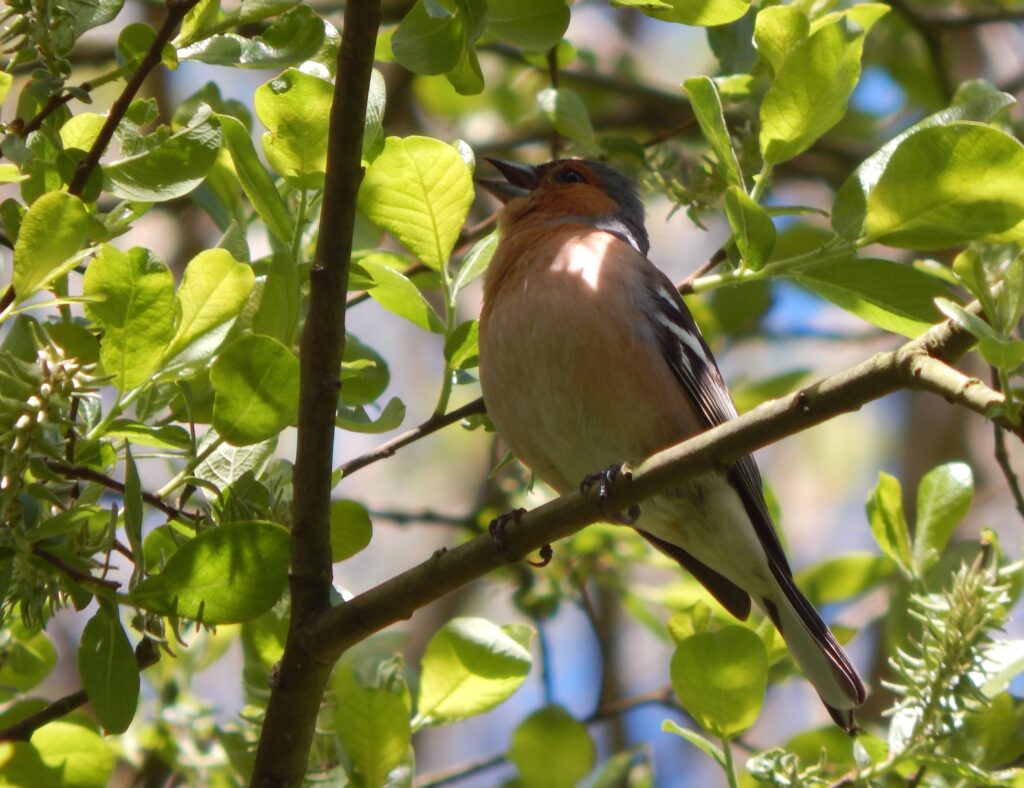
Chaffinch (Fringilla coelebs)
Chaffinches are colourful finches commonly seen around hedgerows, trees and garden feeders. The males are particularly striking in spring with their blue-grey caps and pinkish breast.
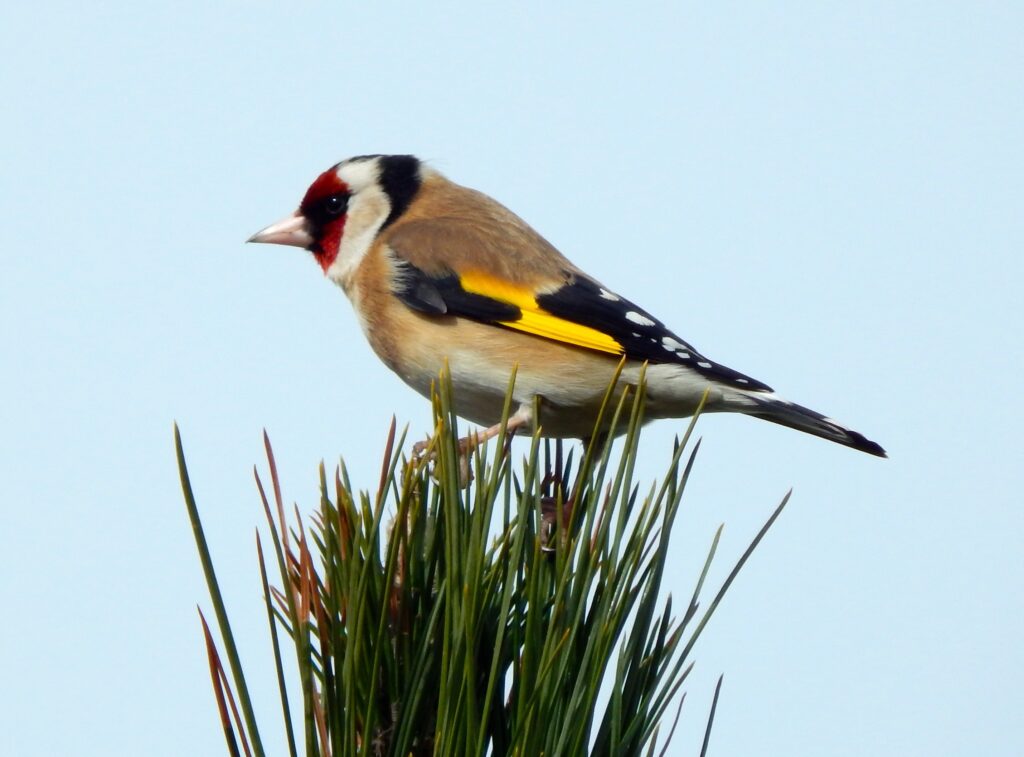
Goldfinch (Carduelis carduelis)
Goldfinches are elegant finches with bright red faces and flashes of yellow in their wings. They often feed on seeds from thistles and teasels and frequently visit garden feeders.
Occasional or Seasonal Visitors
- Blackcap (Sylvia atricapilla)
- Song Thrush (Turdus philomelos)
- Pied Wagtail (Motacilla alba)
- Redwing (Turdus iliacus)
- Nuthatch (Sitta europaea)
- Whitethroat (Curruca communis)
- Swallow (Hirundo rustica)
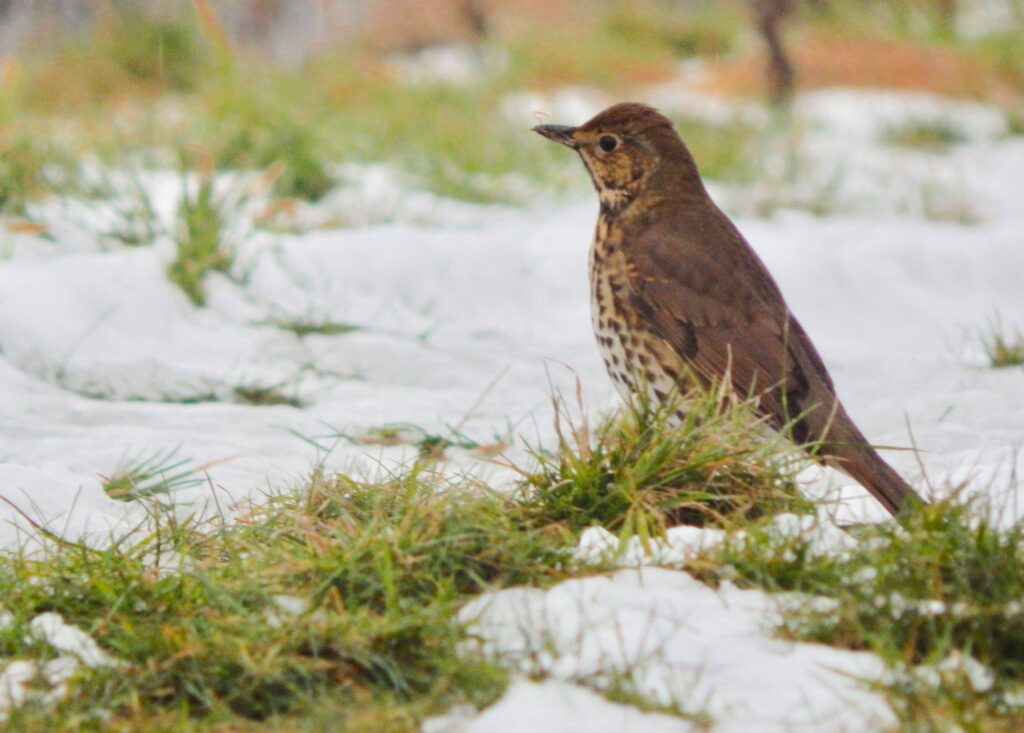
Song Thrush (Turdus philomelos)
Song thrushes are famous for their clear, repeated song phrases delivered from trees and rooftops. They are also known for using favourite stones as “anvils” to break open snail shells.
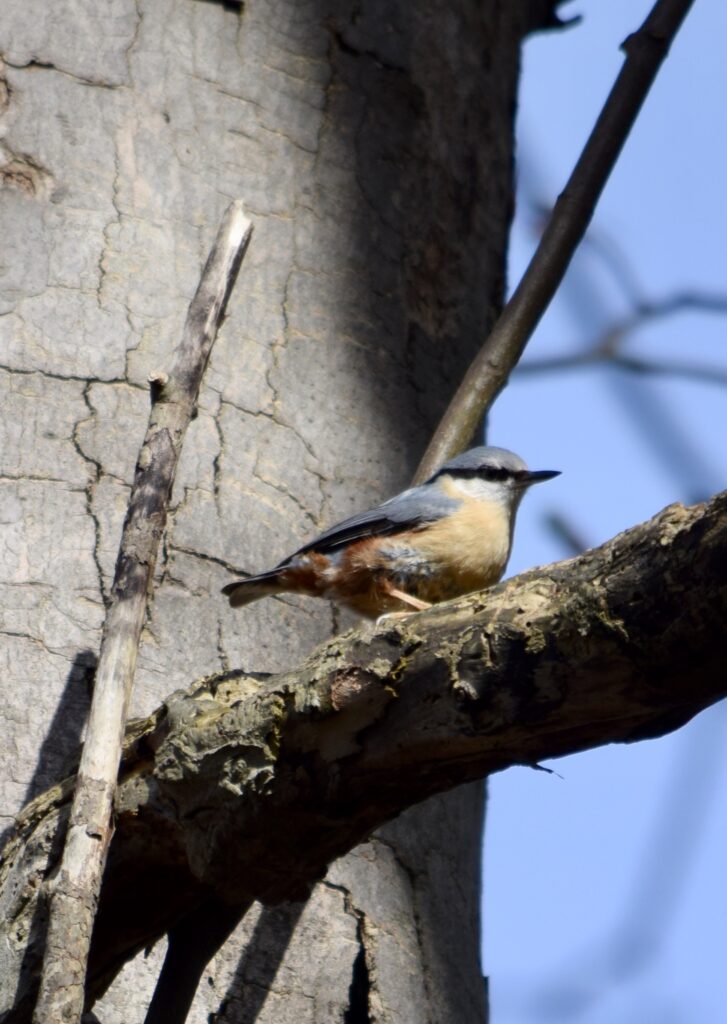
Nuthatch (Sitta europaea)
Once rarely seen North of the Border but as the climate changes more frequently seen in woodlands and Parks
Rivers, Ponds and Wetland
- Mute Swan (Cygnus olor)
- Coot (Fulica atra)
- Moorhen (Gallinula chloropus)
- Mallard (Anas platyrhynchos)
- Goldeneye (Bucephala clangula)
- Dipper (Cinclus cinclus)
- Grey Wagtail (Motacilla cinerea)
- Grey Heron (Ardea cinerea)
- Red-breasted Merganser (Mergus serrator)
- Goosander (Mergus merganser)
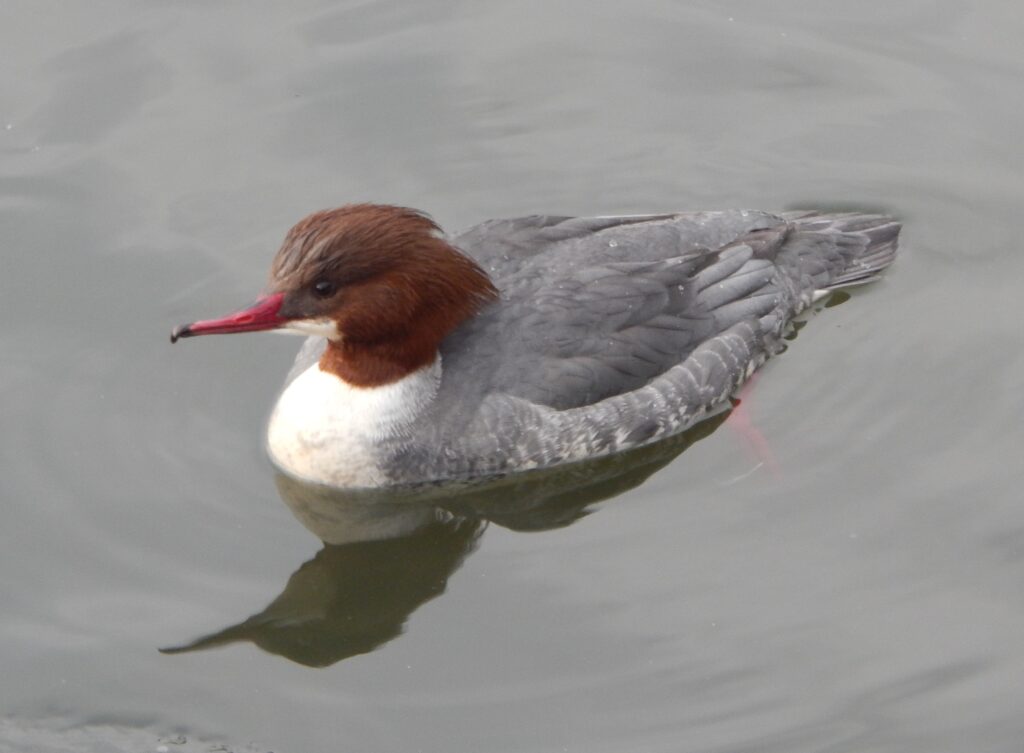
Goosander (Mergus merganser)
The Goosander is a striking diving duck found on rivers, reservoirs and coastal inlets. The male has a dark green head, white body and slender red bill, while the female has a grey body and a distinctive rusty-brown head with a shaggy crest.
Unlike many ducks that feed mainly on plants, goosanders are specialist fish-hunters. They dive beneath the water and pursue small fish using powerful feet and a narrow serrated bill designed for gripping slippery prey.
In late summer and autumn it is sometimes possible to see large groups of young birds together on rivers and sheltered coastal waters. These gatherings can number twenty or more and form what are sometimes called “crèches”, where several broods move and feed together.
Coastal and Estuarine
- Lesser Black-backed Gull (Larus fuscus)
- Common Gull (Larus canus)
- Cormorant (Phalacrocorax carbo)
- Oystercatcher (Haematopus ostralegus)
- Razorbill (Alca torda)
- Eider (Somateria mollissima)
- Barnacle Goose (Branta leucopsis)
- Tern (Sterna spp.)
- Puffin (Fratercula arctica)
- Razorbill (Alca torda)
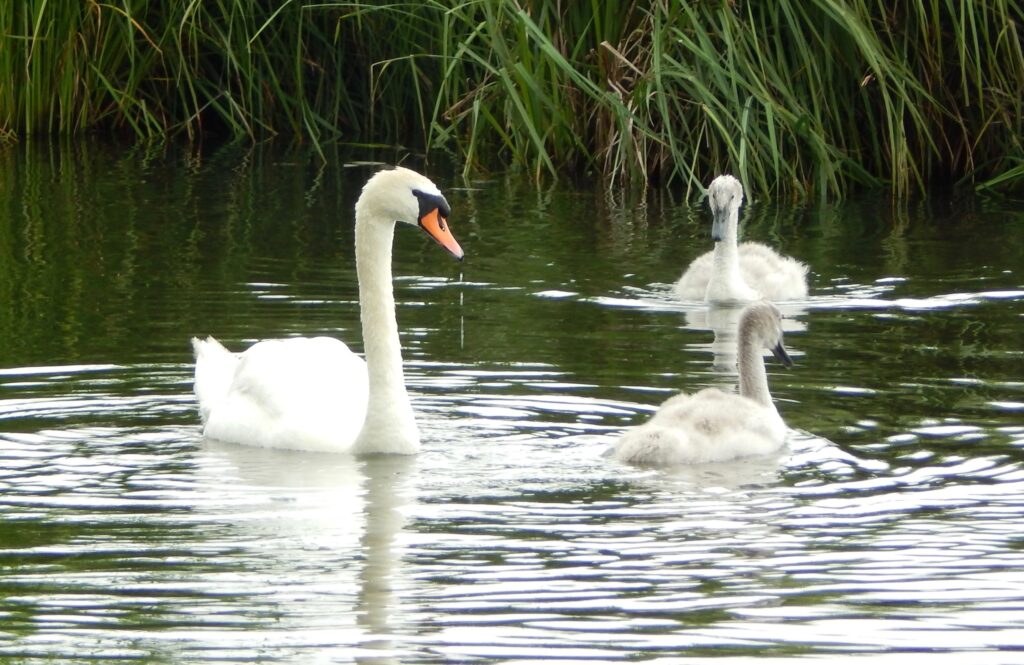
Mute Swan (Cygnus olor)
Swans are among the most striking birds seen on local waters. The familiar Mute Swan (Cygnus olor) is the species most often encountered on ponds, canals and sheltered coastal waters around Edinburgh. Large, graceful and powerful, swans feed mainly on aquatic plants, dipping their long necks beneath the surface to reach vegetation below.
Although they appear calm, swans are strongly territorial during the breeding season and will defend their nests vigorously. In winter, other species such as the Whooper Swan (Cygnus cygnus) may pass through Scotland on migration from Iceland, sometimes gathering on wetlands and farmland during colder months.
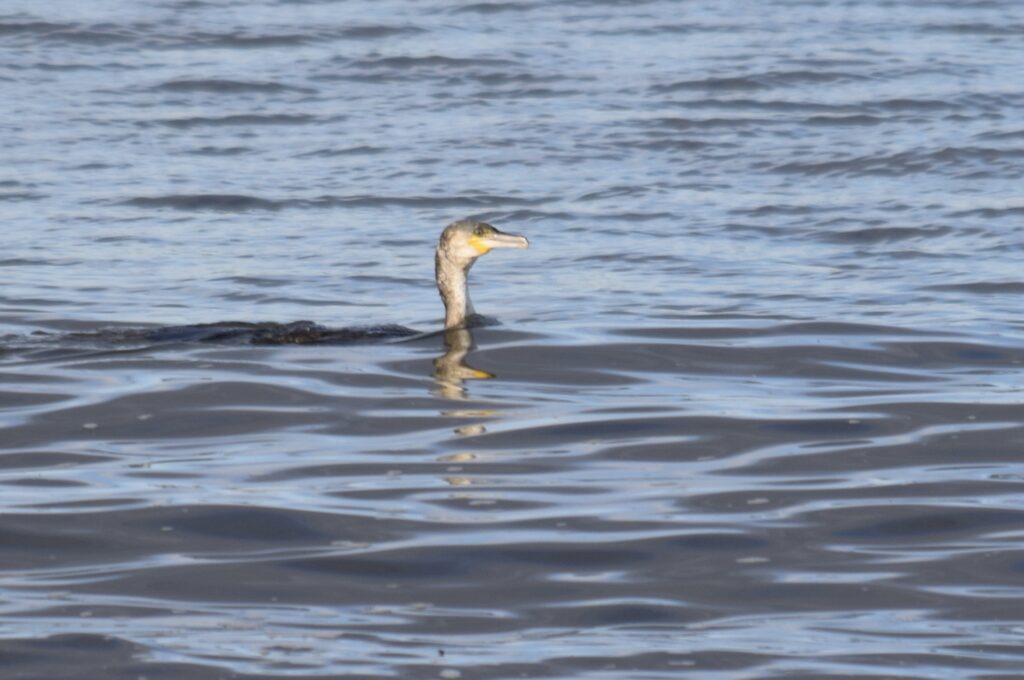
Cormorant (Phalacrocorax carbo)
Cormorants are large fish-eating birds commonly seen along the coast and estuaries. They often perch with wings spread to dry after diving for fish.
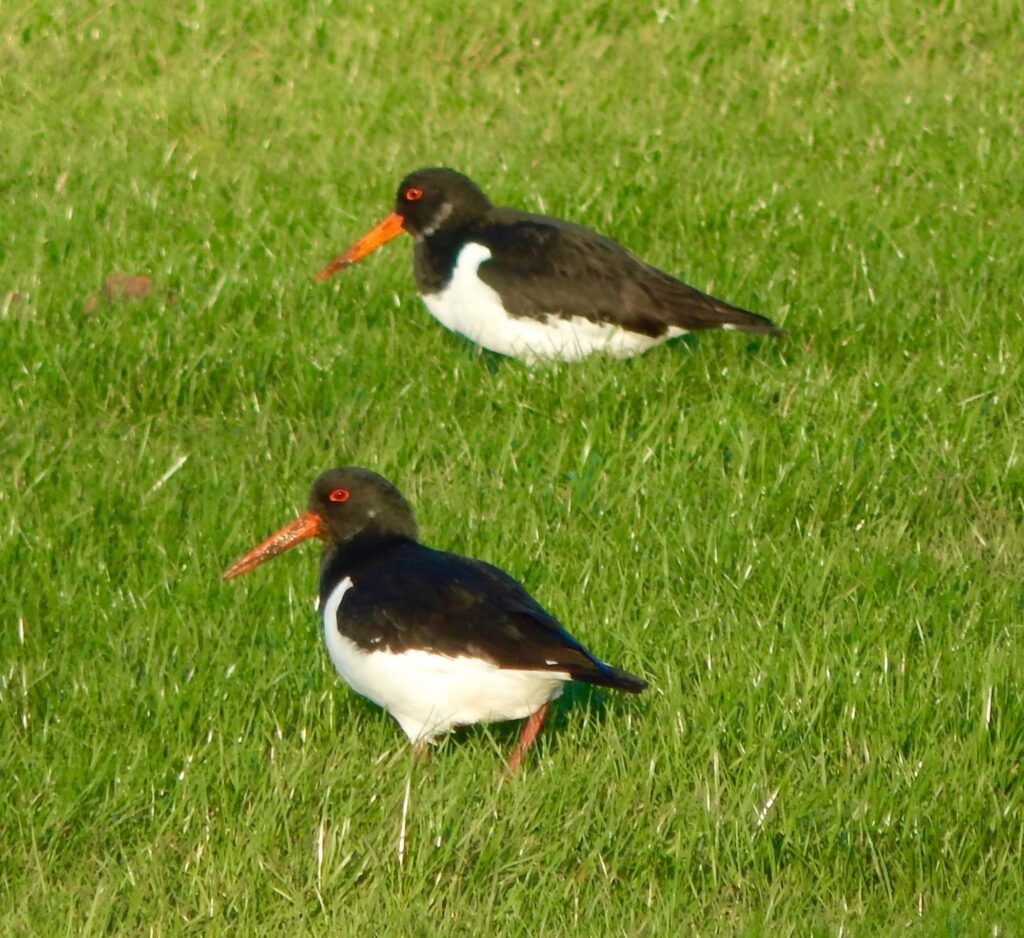
Oystercatcher (Haematopus ostralegus)
Oystercatchers are striking black and white wading birds with bright orange bills and pink legs. Although associated with the coast, they are also often seen feeding in nearby fields.
Birds of Prey
- Kestrel (Falco tinnunculus)
- Sparrowhawk (Accipiter nisus)
- Buzzard (Buteo buteo)
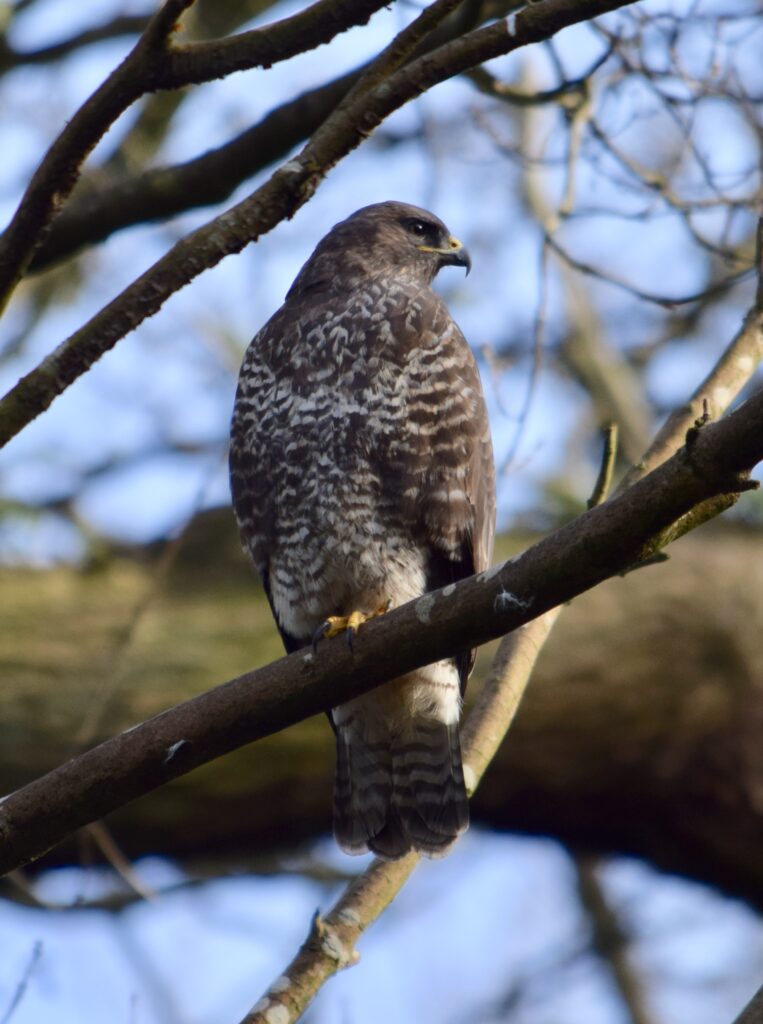
Buzzard (Buteo buteo)
Buzzards are now a common sight across much of the UK. They soar on broad wings, often circling high above fields and woodland edges while calling with a distinctive mewing cry.
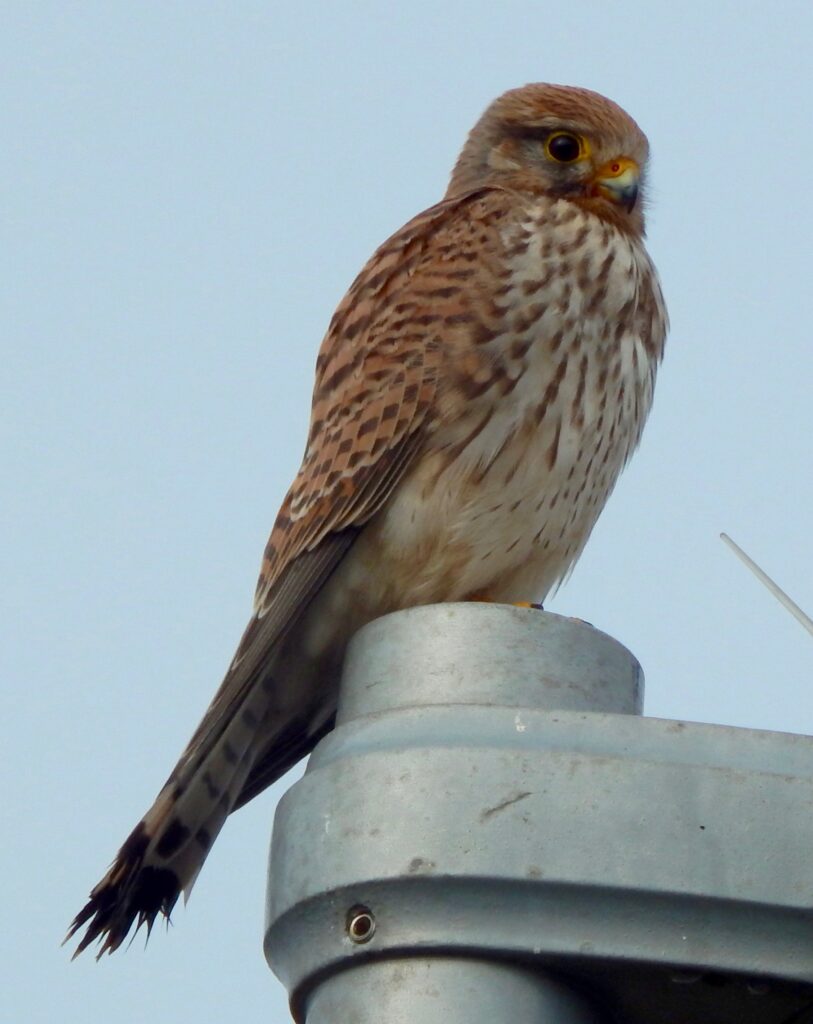
Kestrel (Falco tinnunculus)
Kestrels are often seen hovering over rough grassland while searching for small mammals such as voles and mice. Their distinctive hovering flight, with rapidly beating wings and a fanned tail, makes them one of the easiest birds of prey to recognise